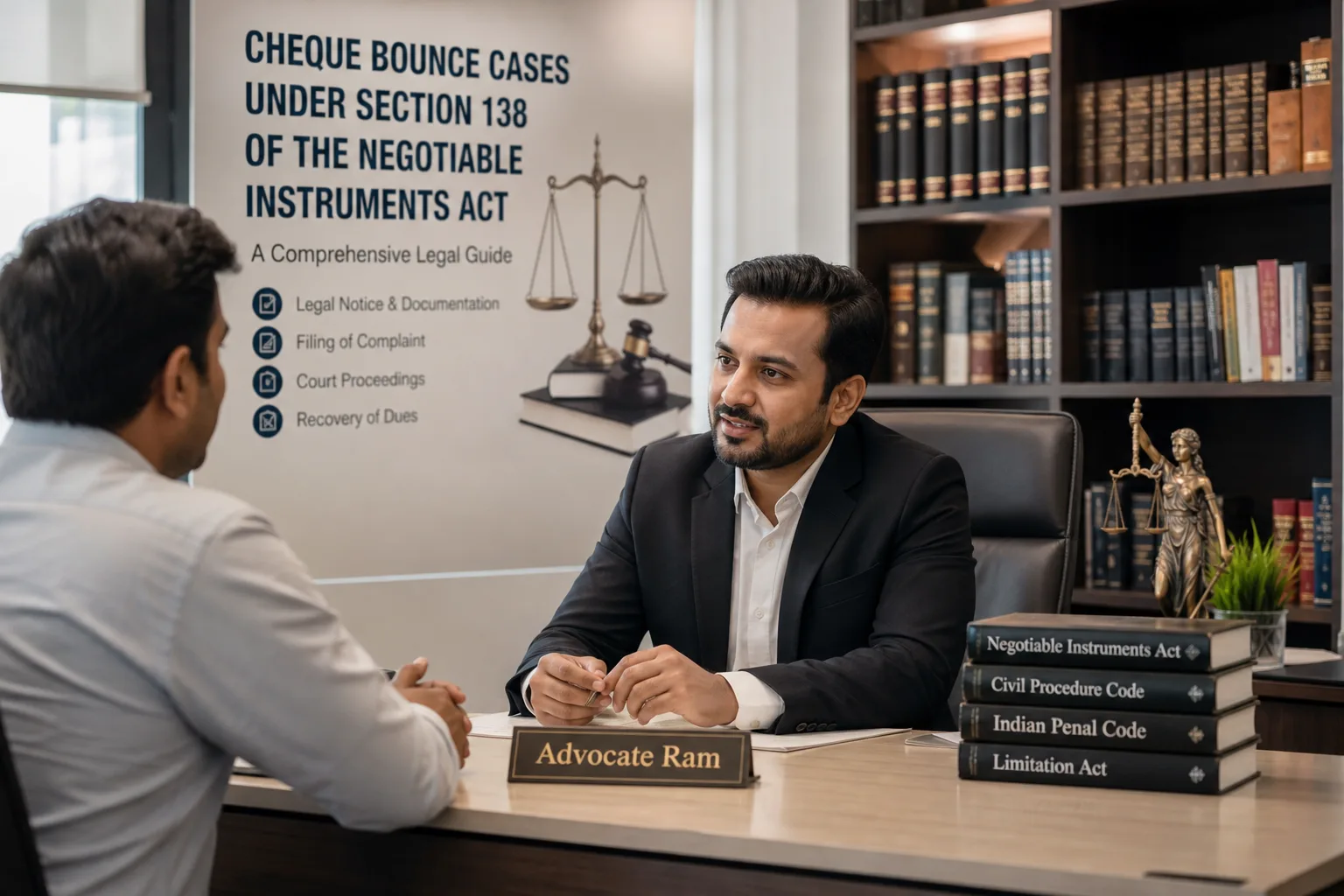
Cheque bounce cases, governed by Section 138 of the Negotiable Instruments Act, represent a significant aspect of financial disputes. Understanding the legal nuances of these cases is crucial, especially for individuals and businesses seeking effective legal remedies. In this guide, we explore the intricacies of cheque bounce cases and how Advocate Ram’s expertise can provide tailored solutions.
Understanding Cheque Bounce Cases Under Section 138
Section 138 of the Negotiable Instruments Act addresses the consequences of cheque dishonor due to insufficient funds or other valid reasons. This section empowers the payee to initiate legal proceedings against the drawer of the cheque.
Legal Framework
The legal framework under Section 138 is designed to ensure the credibility of cheque transactions. It provides a statutory remedy to the aggrieved party, emphasizing the importance of fulfilling financial commitments.
- Initiation of legal proceedings is conditional upon the issuance of a legal notice within 30 days of cheque bounce.
- The drawer has 15 days to make the payment after receiving the notice.
- Failure to comply can lead to filing a complaint in the appropriate court.
Advocate Ram's Approach to Cheque Bounce Cases
Advocate Ram’s legal services are structured to offer clarity and efficiency in handling cheque bounce cases. Our approach is rooted in thorough legal analysis, personalized client interactions, and strategic litigation processes.
Step-by-Step Process
Our methodology involves a step-by-step process that ensures compliance with legal mandates while aggressively pursuing client interests.
| Step | Description |
|---|---|
| 1. Initial Consultation | Understanding the client’s situation and evaluating legal options. |
| 2. Notice Drafting | Preparing and sending a legal notice to the drawer. |
| 3. Case Filing | Filing a complaint if the drawer fails to respond or make payment. |
| 4. Court Representation | Advocating for the client in court to ensure a favorable outcome. |
Common Challenges in Cheque Bounce Cases
Cheque bounce cases often involve complex challenges that require expert legal navigation. Advocate Ram is adept at overcoming these hurdles, ensuring that clients receive the justice they deserve.
Potential Obstacles
Some common challenges include:
- Proving the validity of the cheque and the underlying transaction.
- Ensuring timely response to legal notices and court summons.
- Navigating intricate legal defenses raised by the opposition.
Conclusion
Understanding the nuances of cheque bounce cases under Section 138 is essential for securing legal redress. Advocate Ram’s expertise in this domain offers clients reliable solutions tailored to their specific needs. By employing a methodical approach, Advocate Ram ensures that clients navigate the legal landscape with confidence and achieve justice in their financial disputes.
Comprehensive Best Practices & Strategic Implementation
When implementing cheque bounce cases, successful organizations adhere to structured workflows. By maintaining clear quality benchmarks, eliminating bottlenecks, and empowering teams with modern toolsets, businesses achieve sustainable performance improvements.
Strategic Pillars for Long-Term Value
First, conduct a comprehensive audit to establish baseline metrics. Understanding current operational challenges ensures that resources are directed where they generate the highest return. Next, prioritize high-impact initiatives that yield immediate efficiencies while building long-term institutional capability.
Overcoming Common Implementation Pitfalls
Many teams stumble by trying to execute too many changes simultaneously without sufficient training or feedback loops. Avoid scope creep by standardizing core routines, documenting best practices, and celebrating incremental milestones along the way.
Continuous Performance Monitoring & Scaling
Finally, implement automated reporting loops to track progress and refine your tactical execution over time. Regularly reviewing analytics allows decision-makers to adapt quickly to changing market dynamics and customer expectations.