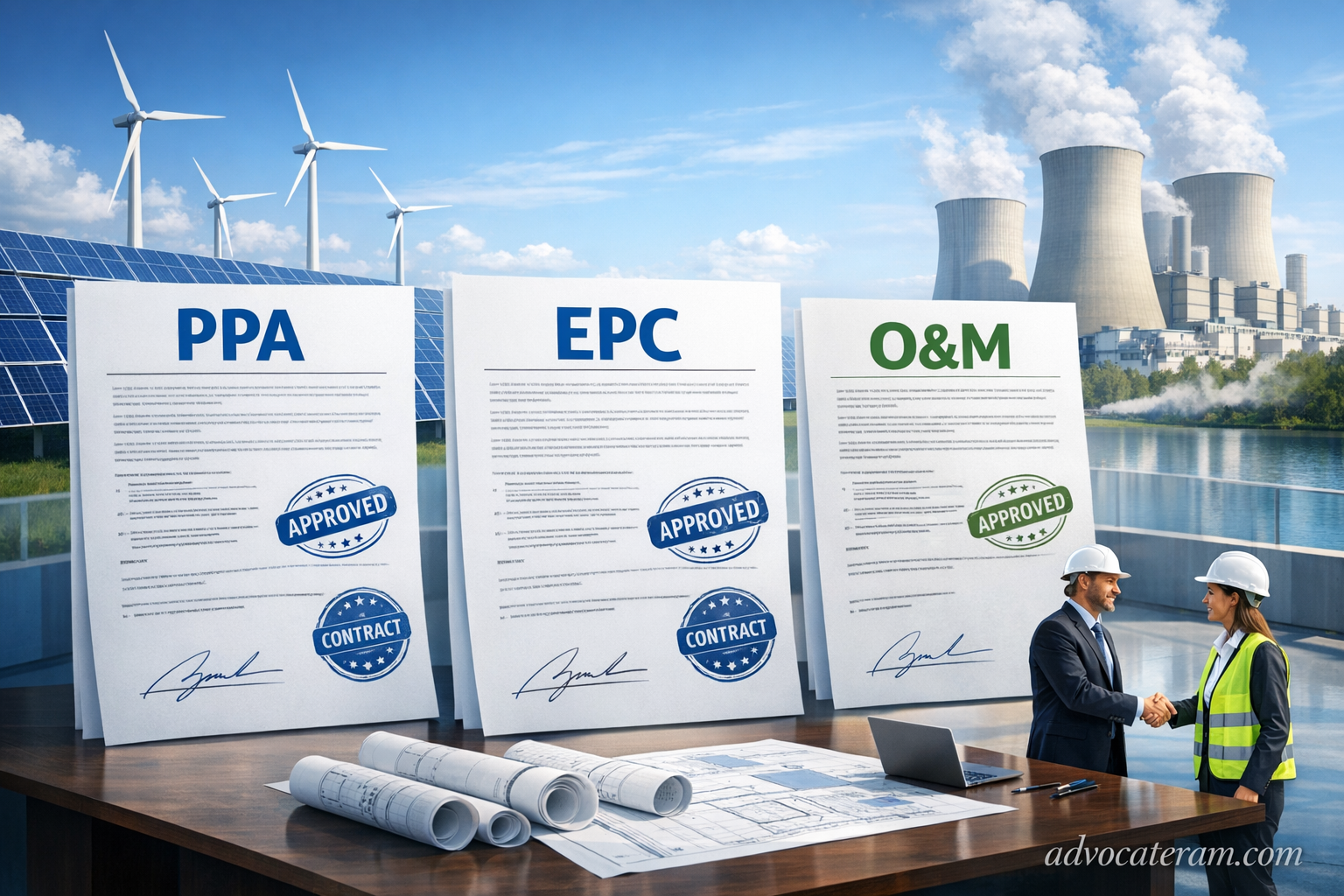
PPA, EPC, and O&M agreements form the backbone of power project development, particularly in renewable energy sectors like solar and wind. These contracts ensure clear risk allocation, timelines, and performance from development through operations.
Power Purchase Agreement (PPA)
A PPA is a long-term contract between a power generator (producer) and a buyer (off-taker, such as a utility or grid operator). It secures revenue by committing the buyer to purchase electricity at agreed rates, often for 10-25 years.
Key elements include pricing mechanisms like fixed tariffs, escalation clauses for inflation, and capacity payments for availability. During construction, PPAs set milestones like Commercial Operation Date (COD), with penalties for delays such as liquidated damages or termination rights. Post-COD, they guarantee minimum output levels, with shortfall remedies like capacity payments or buy-downs.
PPAs align with lenders’ needs by providing stable cash flows, often back-loaded to cover debt service. In India, under frameworks like SECI tenders, PPAs include change-in-law provisions for regulatory shifts and force majeure for events like pandemics. Risks flow down to EPC contractors, ensuring construction matches PPA guarantees.
EPC Agreement Overview
EPC stands for Engineering, Procurement, and Construction—a turnkey contract where one contractor delivers a fully operational facility for a fixed price and schedule. Common in renewables, it transfers design, supply, and build risks to the contractor.
The contractor handles detailed engineering (plant layout, specs), procures equipment (modules, inverters), and constructs on-site (civil works, erection, testing). “Full-wrap” EPCs extend to permitting and commissioning, minimizing developer involvement. Payments are milestone-based: advance, 70-80% progressive, retention until handover.
Performance guarantees cover output (e.g., 80% capacity), efficiency, and availability, with liquidated damages (LDs) for shortfalls—typically 10-20% of contract value capped. Liquidated delays (0.5-1% per week) enforce timelines syncing with PPA COD.
EPC Key Clauses
Scope is rigidly defined to avoid variations; changes trigger claims with cost-plus pricing. Insurance covers all-risks during construction, with contractor liability up to 100% contract value.
Warranties last 1-2 years post-COD, remedying defects at no cost. Termination options include convenience (developer pays costs) or default (performance bonds seized). Parent company guarantees or bonds secure obligations.
In power projects, EPC mirrors PPA: capacity tests match off-taker thresholds, recovery plans address shortfalls, preventing owner squeeze between contracts.
O&M Agreement Basics
Operations and Maintenance (O&M) agreements cover post-COD plant upkeep, typically 5-25 years, ensuring optimal performance against degradation. EPC contractors often provide initial O&M, transitioning to specialists.
Scope splits into scheduled (routine inspections, cleaning) and unscheduled (breakdowns) maintenance. Operator manages staffing, spares inventory, SCADA monitoring, and reporting—targeting >95% availability.
Fixed + variable pricing prevails: annual fee plus kWh-based costs. Incentives tie to performance ratios (PR >75-80%), with penalties for downtime beyond thresholds (e.g., 2% fee cut per 1% below target).
O&M Responsibilities
Technical: Predictive maintenance via drones/IR thermography, vegetation control, inverter replacements. Commercial: Metering, billing under PPA, insurance renewals.
Long-term service agreements (LTSA) bundle turbine/spare warranties. In India, O&M includes compliances like CEA metering and state grid codes.
Risks like revenue loss from outages shift to operator, backed by performance bonds (3-10% contract value).
Interconnections: PPA, EPC, O&M
PPA drives EPC: Schedules align (EPC LDs cover PPA delay costs), guarantees flow down (EPC capacity tests validate PPA output). EPC hands over to O&M with as-built docs, warranties.
O&M sustains PPA metrics: Availability shortfalls trigger PPA damages, reimbursed via O&M penalties. Lenders require back-to-back terms, single-point accountability.
Example: Solar farm—PPA mandates 22% PR; EPC guarantees Year 1; O&M maintains via cleaning, yielding 4% annual degradation max.
| Aspect | PPA | EPC | O&M |
| Phase | Pre/Post-COD revenue | Construction | Operations |
| Risk Owner | Generator/Off-taker | Contractor | Operator |
| Key Guarantee | Tariff, Output | Capacity, Timeline | Availability, PR |
| Penalties | LDs, Termination | LDs (10-20%) | Fee Cuts, Bonds |
| Duration | 25 years | 1-3 years | 5-25 years |
| Alignment | Flows to EPC/O&M | Mirrors PPA tests | Sustains PPA metrics |
Advantages and Risks
PPA Pros: Revenue certainty attracts finance; Cons: Take-or-pay exposes to off-taker default.
EPC Pros: Fixed price predictability; Cons: Higher bids embed contingencies (10-15% premium).
O&M Pros: Expertise optimizes yield; Cons: Black-box pricing hides inefficiencies.
In Gujarat (user location), SECI/GEDA solar PPAs integrate EPC/O&M bids, emphasizing bankable FID. Total ecosystem minimizes developer risk, maximizing IRR.
Challenges: Misalignments cause disputes—e.g., PPA COD before EPC mechanical completion. Mitigation: Interface agreements, joint tests.