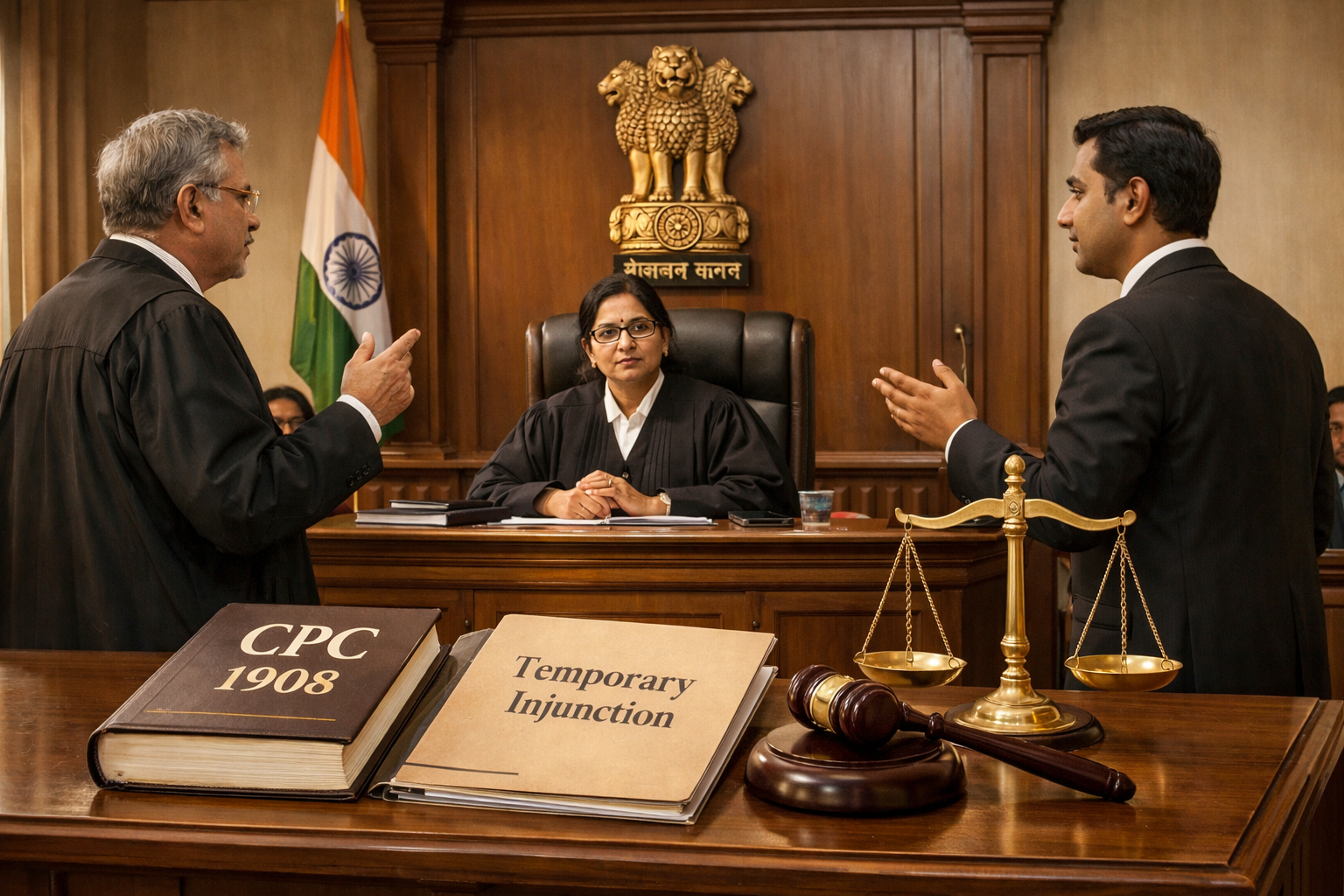
An injunction is a court order that either prohibits a party from doing something (prohibitory injunction) or requires them to perform a specific act (mandatory injunction) to protect legal rights and prevent harm. Its impact extends across civil litigation, offering swift equitable relief where monetary damages fall short, but it demands careful judicial discretion to balance competing interests.
Legal Definition
Injunctions derive from equity jurisprudence, serving as preventive remedies under statutes like India’s Specific Relief Act, 1963 (Sections 36-42) and Code of Civil Procedure, 1908 (Order XXXIX). Courts issue them to restrain breaches of contract, property rights violations, intellectual property infringements, or irreparable injuries that cannot be adequately compensated by money. Unlike damages, which address past wrongs, injunctions avert future harm, acting as a “judicial shield” in disputes involving environmental risks, trade secrets, or fiduciary duties.
The core prerequisites for granting an injunction include a prima facie case, irreparable injury without it, and a balance of convenience favoring the plaintiff. Courts exercise caution, denying injunctions if the plaintiff has unclean hands, delays unreasonably, or if it would cause undue hardship to the defendant. Violation invites contempt proceedings, with penalties like fines or imprisonment.
Types of Injunctions
Injunctions classify by duration, nature, and scope, each tailored to litigation stages.
- Temporary (Interim) Injunctions: Preserve the status quo pending trial, granted ex parte or after notice under CPC Order XXXIX Rules 1-2. They prevent ongoing harm during proceedings.]
- Permanent (Perpetual) Injunctions: Final remedies under Specific Relief Act Section 38, issued post-trial to eternally bar rights violations.
- Prohibitory Injunctions: Forbid specific acts, like halting IP infringement or defamation. Example: In M.C. Mehta v. Union of India (Oleum Gas Leak, AIR 1987), the Supreme Court prohibited hazardous industries in Delhi.
- Mandatory Injunctions: Compel positive action to restore prior conditions, rarer due to enforcement challenges, as in breach of contract cases.
- Interlocutory Injunctions: Bridge temporary and permanent, issued mid-suit for urgent relief.
Impacts in Litigation
Injunctions profoundly shape civil disputes by providing immediate justice.
Preventive Power
They halt irreparable damage swiftly—e.g., stopping trademark counterfeiting preserves brand value beyond monetary loss. In environmental law, like M.C. Mehta, injunctions enforced pollution controls, safeguarding public health preemptively.
Status Quo Maintenance
Temporary orders freeze actions, preventing faits accomplis that moot trials. This ensures merits decide outcomes, not self-help.
Economic Ramifications
Businesses face operational halts; a prohibitory injunction against a competitor’s unfair practice can shift market dynamics overnight. Conversely, denial risks plaintiff insolvency.
| Aspect | Positive Impact | Negative Impact |
| Plaintiff | Secures rights, avoids harm | Delayed if denied, costs mount |
| Defendant | Limits scope if tailored | Business freeze, revenue loss |
| Judiciary | Efficient dispute resolution | Overburden from appeals |
Sector-Specific Impacts
Intellectual Property
Injunctions are pivotal; they block infringement sales, preserving exclusivity. Without them, generics erode patents irreparably.
Contractual Disputes
Mandatory injunctions enforce specifics like non-compete clauses, deterring breaches.
Family and Property Law
They prevent spousal dispossession or trespass, maintaining peace.
Public Interest
In PILs, injunctions curb governmental inaction, as in pollution cases, amplifying societal welfare.
Broader Societal Effects
Injunctions deter violations proactively, fostering compliance cultures. Yet, overuse risks “forum shopping” or stifling innovation—e.g., patent trolls securing overbroad IP blocks. Globally, they mirror common law equity, influencing trade via WTO disputes.
Economically, they stabilize markets by signaling judicial protection of rights, boosting investor confidence. Politically, ex parte grants raise due process concerns, demanding safeguards.
Challenges and Reforms
Abuse via frivolous suits clogs courts; reforms urge stricter prima facie scrutiny. Digital eras demand interim injunctions against online defamation, balancing free speech.